WFHB Bloomington Community Radio

Podcast: Play in new window | Download (Duration: 26:56 — 61.6MB)
Subscribe: RSS
In this week’s Eco Report feature, WFHB correspondent Zero Roze interviews the founder of one of the newer nonprofits in Monroe County dedicated to local urban agriculture and healthy food as a human right. Stay tuned to learn more about their innovative model from Gavin Everett of Community Culture Inc.
In Indiana, the primary concern regarding air quality often revolves around particulate matter, particularly PM2.5 (particles with a diameter of 2.5 micrometers or less). These microscopic particles can pose health risks by irritating the lungs and potentially causing respiratory issues.
Communities in southern Indiana, particularly around the Ohio River Valley, have historically faced high PM2.5 concentrations due to the prevalence of coal-fired power plants in the region. Health effects: Exposure to PM2.5 from coal power plants has been linked to severe health outcomes, including:
- Premature deaths
- Respiratory problems like asthma attacks, bronchitis, and COPD
- Cardiovascular issues, including heart attacks and strokes
- Increased risk of lung cancer
- Developmental issues in children
Mercury contamination: Power plants are also a significant source of mercury emissions, leading to fish consumption advisories in Indiana waterways. Ingesting mercury can cause neurological damage, especially in children. Information from 2018 indicates that Indiana was ranked 46th for air quality in the U.S. based on public exposure to particulate matter of 2.5 microns (PM2.5). This ranking was determined by the United Health Foundation, which measures average exposure to PM2.5.
The ranking of Ohio concerning 2.5 micron or PM2.5 reveals:
- Columbus was ranked as the most polluted city in the US in 2023 for fine particulate matter (PM2.5), according to IQAir data, with a concentration of 13.9, which is significantly higher than the World Health Organization’s guideline of 5.
- Other Ohio cities like Orrville and Grove City also had high PM2.5 levels, at 14.3.
- Cleveland was listed as having a PM2.5 reading of 12.4 as its yearly average in 2020, placing it in the moderate ratings bracket and 1st place among cities ranked in Ohio that year.
Regarding PM2.5 (2.5 micron) pollution levels and rankings in Michigan:
- The average PM2.5 concentration in Michigan is reported as 6.7 micrograms per cubic meter. This figure represents the average for the state. According to IQAir, the most polluted city in Michigan, based on the Air Quality Index, is Fraser, with an AQI of 74. While specific national rankings for Michigan’s PM2.5 levels are not explicitly mentioned in the provided search results, it’s important to note that the Detroit-Warren-Ann Arbor area ranks #6 nationally for year-round particle pollution.
- Information regarding Kentucky’s 2.5 micron (PM2.5) pollution level and rankings is available. Kentucky’s current average PM2.5 level is 7, which is considered healthy and safe according to air quality standards. This level is 2.1 times lower than the WHO recommended guideline of 15. Statewide averages of PM2.5 data show a downward trend from 2001-2022.
Kentucky has a better air quality than Indiana. Why? Indiana has a higher population than Kentucky (2.5 million more) and is more industrialized. Kentucky also burns less coal than Indiana. In 2023, Kentucky burned 21,000 thousand tons of coal, which accounted for 5.0% of the total U.S. coal consumption for that year.
Coal was the source for about 68% of Kentucky’s utility-scale electricity net generation, making it the third-largest share among the states. In 2023, Indiana was the second-largest coal consumer in the United States, consuming approximately 26 million tons of coal. Most of this coal was used for electric power generation, with about 21 million tons consumed in this sector. Making coke accounts for most of the rest of the coal burned.
Armed with bags, gloves, litter pickers and a strong sense of purpose, around 12,000 men, women and children got to work cleaning Britain’s streets, green spaces and beaches as part of a nationwide Great Plastic Pick Up during a weekend in early May. Critics argue that public cleanups do not address the root causes of this pollution.
Cleaning a beach is not turning the tide, they say, because the tide will just come in again, depositing more plastic cups, bottles, straws, bags and discarded fishing equipment. What we need to do, they argue, is reduce unnecessary plastic at source, design less harmful products and develop better recycling processes.
However, there is compelling evidence that cleanup campaigns, like the Great Plastic Pick Up, do make a difference and not just in the short term. Every piece of trash that is taken away to be recycled or deposited in a landfill means there is one less dangerous item for birds, turtles or whales to swallow. Cleanups also restore these creatures’ habitats.
Beach cleanups also serve to educate. When volunteers see just how much plastic is deposited on our shores, they are often inspired to reduce their reliance on single-use plastics, and, crucially, to spread the word to others.
Speaking of plastic: Scientific research is beginning to reveal the effects that microplastics may be having on our bodies — organ dysfunction, metabolic disorders, altered immune responses, neurotoxicity, reproductive and developmental toxicity and more. People are asking how they can reduce their exposure to microplastics. In the guide we will talk about next, there are tips to help you protect yourself and your loved ones from microplastics.
Microplastics are smaller than a grain of rice, which is what makes them so easy to unknowingly ingest.Some plastics, like the pellets used to make products (also called nurdles), are manufactured at this size, and can end up washing down the drain or being spilled into waterways. From there, marine animals like fish and shellfish can ingest the plastic, which gets into our bodies when we eat seafood.
Other microplastics are the result of larger plastics breaking down into smaller and smaller pieces. Most plastics never really go away. They just degrade into bits of plastic that continue to pollute our environment and potentially threaten our health. Plastic food and beverage containers, clothing made with plastic materials, and flame-retardant furniture can all directly expose us to microplastics, which get swallowed when we drink from a plastic container, absorbed through our skin, or even breathed in the air.
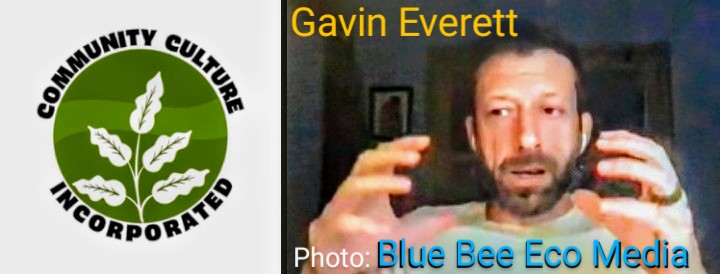
In this week’s Eco Report feature, WFHB correspondent Zero Roze and his conversation with Gavin Everett of Community Culture, a new organization working with local landowners, gardeners, farmers, volunteers and organizations in order to grow fresh produce wherever it is possible and permitted by building a network of community partners.

- Take a Herp Hike at Griffy Lake Nature Preserve on Saturday, July 12th, from 6 to 8 pm. Hunt for native amphibians and reptiles. Learn how to find frogs, snakes and salamanders and discover their roles in nature. Register at bloomington.IN.gov/parks.
- Learn about the Symbols of Indiana at Spring Mill State Park on Sunday, July 13th, at 11 am. Find out about the State Stone, the State Song and much more. Meet at the Lakeview Activity Center.
- Have a Ribbiting Conversation at McCormick’s Creek State Park on Monday, July 14th, from 3 to 4 pm. Learn native frog and toad calls in a fun musical program at the Nature Center.
- Take the Lake Ogle Hike at Brown County State Park on Wednesday, July 16th, from 9 to 10:30 am. Hike Trail 7 around Lake Ogle while you learn about the history and animals that make the lake their home.
- There will be a Moth Night at Winslow Woods Park on Friday, July 18th, from 9 to 10:30 pm. You will learn how to attract moths and observe them with a white sheet and light. Register at bloomington.IN.gov/parks.
Credits:
On Air………………………………..Julianna Dailey
On Air………………….Noelle Herhusky-Schneider
Headlines…………………………………Norm Holy
Headlines…………………………..Frank Marshalek
Feature Report…………………………… Zero Roze
Script…………………………………Julianna Dailey
Events Calendar…………………….Julianna Dailey
Engineer…………………………..Branden Blewett
Are you looking for a way to make a difference on environmental issues?
Eco Report is looking for reporters, engineers, and segment producer to report facts on how we’re all affected by global climate disruption and the ongoing assaults on our air, land and water. We also celebrate ecologists, tree huggers, soil builders and other champions who actively protect and restore our natural world, particularly those who are active in south central Indiana. All levels of experience and all ages are welcome, and we provide the training you’ll need. WFHB also offers internships.
To volunteer for Eco Report, call at (812) 323-1200, or e-mail [email protected].