WFHB Bloomington Community Radio


Podcast: Play in new window | Download (Duration: 28:54 — 66.1MB)
Subscribe: RSS
In this week’s feature, Eco-Report’s Carrie Albright speaks with Shannon Gayk from IU’s English Department about the Environmental Futures Initiative—a group bringing together artists, scientists, scholars, and the community to explore our relationship with nature.
The Nature Conservancy is working to improve water quality in the White River. The White River is the largest contributor of nitrogen and the second-largest contributor of phosphorus to the Wabash River, which is the largest contributor of nutrients to the Gulf of Mexico in the entire Mississippi River Basin. While that is not something to brag about, it gives us a lot of space and opportunity to make noticeable and measurable improvements. The Nature Conservancy is priotitizing federal dollars for farmers to put toward conservation practices in their farm fields that will help reduce erosion and runoff, ultimately improving water quality in the watershed.
Approximately 31% of the world’s population is expected to suffer from high to extremely high water stress by 2050. Water shortages are becoming a way of life. Climate change, overextraction for agriculture, pollution and land-use changes are fueling the trend. Most people on the planet are experiencing periods of drought. We have lost almost one-third of the world’s freshwater ecosystems and seen an 83% decline in freshwater species populations. Only a third of our world’s rivers remain free-flowing and wetlands are declining three times faster than forests. There is hope, we can restore and protect rivers, lakes and wetlands by working directly with local communities, indigenous leaders and all who depend on this critical resource.
Do you own a cat? If so, or not, here are some things you need to know. Cats are not picky eaters! Scientists reviewed more than 100 years of global studies and found that free-ranging felines, both domestic and feral, sample an astounding 2,084 species of birds, mammals, reptiles, amphibians and insects. The findings highlight just how effective these popular pets are as invasive predators, and how much harm they can cause to native ecosystems. Cats are linked to the extinction of more than 60 species worldwide and pose a major threat to birds in North America. Species of conservation concern are not off the menu either. Cats hunt 347 of them, including bobwhite quail, little brown bats and green sea turtles. This is a good reason to keep pet cats indoors, where they live longer lives.
Here’s something to think about. The wealthiest 10% are driving the climate crisis. A new paper by researchers at the International Institute for Applied Systems Analysis, published in Nature Climate Change, links emissions inequality to climate warming and extreme heat. They found that nearly two-thirds of global warming between 1990 and 2020 is attributable to the wealthiest 10% of the global population, while a fifth of warming was caused by the richest 1%, and 8% was caused by the richest 0.1%.
In 2019, the richest 10% included everyone earning more than $48,000 – below US national average of nearly $52,000 that year. The study showed that if the entire world population had emitted at the same level as this top 10%, the Earth would have warmed by 2.9 degrees Centigrade – an increase considered catastrophic by climate experts. If everyone lived like the top 1%, the temperature increase would have been an unthinkable 6.7 degrees Centigrade, while everyone emitting like the richest 0.1% would have led to a planet-killing 12.2 degrees Centigrade of warming.The paper provided a sobering demonstration that at our current population size, there really is no “space” for billionaires and that we need to drastically reduce consumption across the Global North, even among those not considered “wealthy” by US standards.
Salamanders boast some of the most whimsical and descriptive names in the animal kingdom, derived from a variety of sources including physical appearance, habitat, behavior, and even ancient mythology. These names often paint a vivid picture of the creature. Names like snot otter, lasagna lizard, Allegheny alligator and hellbender. Hellbender comes from the fact that it looks like a creature from hell and is bent on going back there – thus the name.
Even though they are quite large and can be up to two feet long they prefer to spend the day hiding under large flat rocks and do most of their hunting and feeding at night. Right now, these elusive salamanders are found only in the Blue River watershed, which stretches across Clark, Crawford, Floyd, Harrison and Washington Counties. They are considered the world’s most threatened group of amphibians. The statistics are sobering, with about 60% of the world’s 760 salamander species facing a high risk of extinction.
The primary drivers of these declines are widespread habitat destruction and degradation, and, increasingly, climate change, which makes them “climate captives” unable to move far enough to escape extreme heat, drought, and wildfires.Purdue University, partnering with the DNR and The Nature Conservancy are leading an effort to breed the species in captivity and release them into the wild since they appear to be unable to naturally reproduce in the wild. The program is proving to be successful. Help the Hellbender efforts include educational programming for anyone interested in conservation.
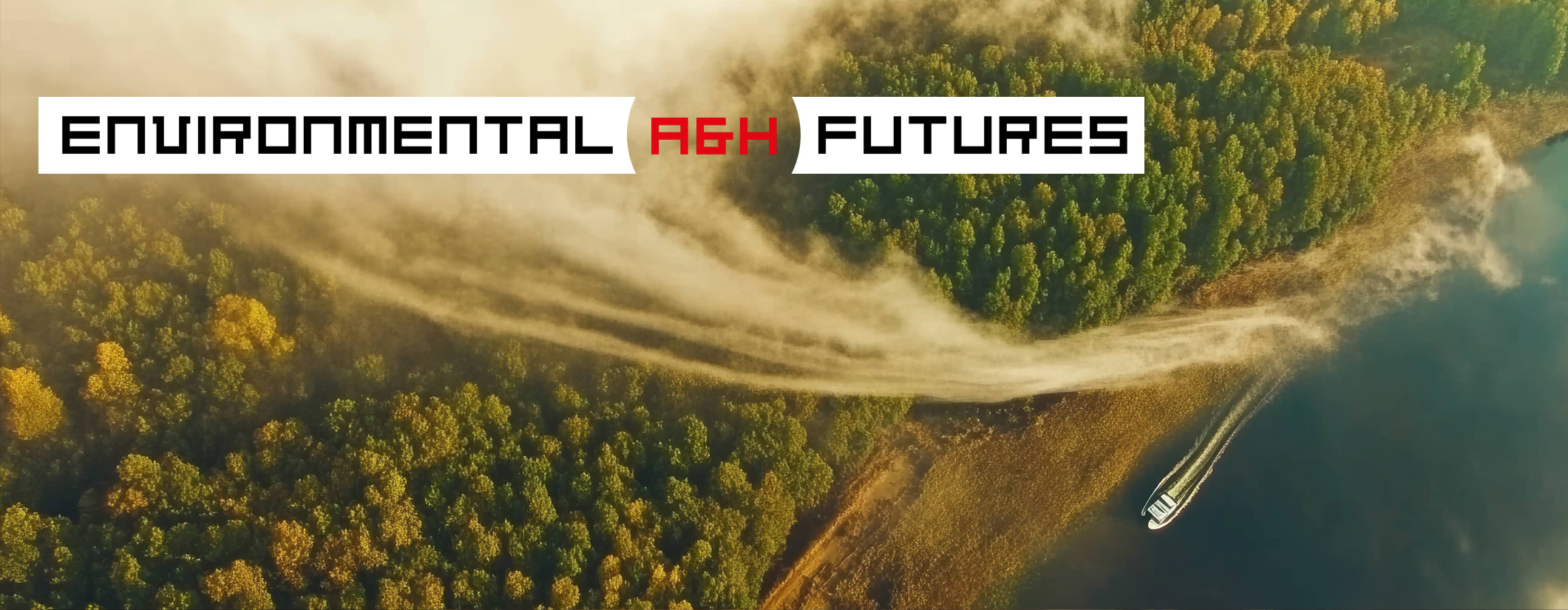
Bridging the arts and humanities with the natural world has long been a priority for our next interview guest, Shannon Gayk. Shannon is a medievalist and English professor at IU who has delved into the ways past societies responded to dramatic environmental upheaval—from cooling temperatures to plagues—using literature as a means for understanding. Today, she leads the Environmental Futures Initiative, fostering collaboration across arts and humanities, sciences, and local communities to deepen our attention to today’s changing world.

- Take a Winter Splendor Hike at Spring Mill State Park on Saturday, December 13th, beginning at 10 am. Meet at the Spring Mill Inn front patio for a hike around Spring Mill Lake on Trail 5 while enjoying the beauty of the season.
- There will be a Geminids Meteor Shower and Telescope Viewing at Fairfax State Recreation Area at Monroe Lake on Saturday, December 13th, from 6:30 to 7:30 pm. Drop by to watch the night sky and see “shooting stars!”
- Whooper Wednesday will take place every Wednesday until February 25th at Goose Pond Fish and Wildlife Area. Meet at the visitor’s center at 8 am to walk around the property to spot resident winter birds, including the endangered Whooping Crane. Dress for the weather.
- Learn about Winter Camouflage at McCormick’s Creek State Park on Sunday, December 14th, from 11 am to 4 pm. During this short hike you will hike around the Nature Center on a scavenger hunt while you see how forest animals use camouflage to blend into their environment.
- Learn about Beaver Dam Building at McCormick’s Creek State Park on Friday, December 19th, from 2 to 2:45 pm. At the Nature Center you will help construct a beaver dam. Then you will put it to the test to see if it will withhold stream currents.
Credits:
On Air………………………………..Julianna Dailey
On Air……………………………….Cynthia Roberts
Headlines…………………………….Julianna Dailey
Headlines……………..The Population Connection
Feature Report………………………Carrie Albright
Feature Report…………………….. Ashton Harper
Script…………………………………Julianna Dailey
Events Calendar…………………….Julianna Dailey
Engineer…………………………..Branden Blewett
Are you looking for a way to make a difference on environmental issues?
Eco Report is looking for reporters, engineers, and segment producer to report facts on how we’re all affected by global climate disruption and the ongoing assaults on our air, land and water. We also celebrate ecologists, tree huggers, soil builders and other champions who actively protect and restore our natural world, particularly those who are active in south central Indiana. All levels of experience and all ages are welcome, and we provide the training you’ll need. WFHB also offers internships.
To volunteer for Eco Report, call at (812) 323-1200, or e-mail [email protected].