WFHB Bloomington Community Radio


Podcast: Play in new window | Download (Duration: 30:00 — 41.3MB)
Subscribe: RSS
This is the WFHB Local News for Wednesday, July 31st, 2024.
Later in the program, Indiana University’s new expressive activity policy goes into effect on Thursday. WFHB News spoke with Dunn Meadow protesters earlier this afternoon. More in today’s headlines.
Also coming up in the next half hour, “The Weed of Crime Bears Bitter Fruit” on Better Beware – your weekly consumer-watchdog segment on the WFHB Local News. More following today’s feature.
But first, your local headlines:
EPA Identifies Ethylene Oxide Exposure at Beyond Safe Levels
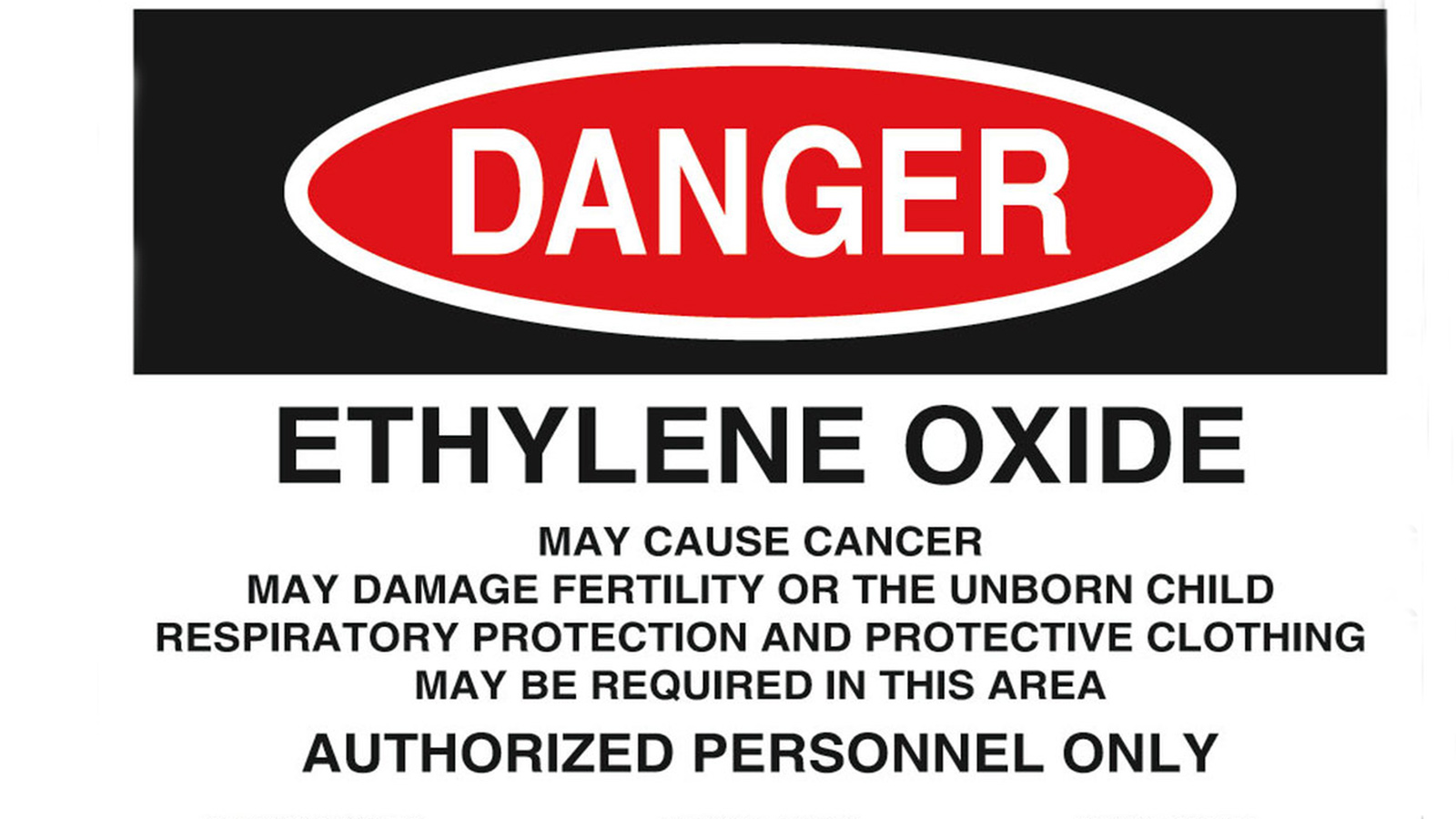
Inside Climate Change reports that for Louisiana’s ‘Cancer Alley,’ studies show an even graver risk from toxic gasses. Levels of ethylene oxide more than 1,000 times higher than what’s considered safe—and far greater than previous estimates—were identified by researchers at John Hopkins.
According to researchers at Johns Hopkins University, those chemicals are present in Cancer Alley at rates that are far higher than previously believed. Using state-of-the-art mobile air monitors, environmental engineers identified plumes of the toxic gas ethylene oxide at the fenceline of facilities that in some cases were more than 1,000 times higher than what the U.S. Environmental Protection Agency considers an “acceptable risk.”
The research team’s findings, published recently in the journal Environmental Science & Technology, noted that the EPA’s acceptable threshold for long-term exposure to ethylene
oxide is 10.9 parts per trillion.
But researchers found an average exposure level nearly three times that amount, 31.4 parts per trillion, when they tested the air across Cancer Alley. The bleak nickname refers to the 85-mile stretch of land from New Orleans to Baton Rouge that is home to roughly 200 petrochemical plants and some of the highest rates of cancer in the nation.
Cook uses ethylene oxide to sterilize its products. The sterilization facility is in Ellettsville near the recycling center. WFIU reported that in 2016, according to the EPA National Air Toxics Assessment, the likelihood of getting cancer in Ellettsville over the course of a lifetime — from air pollution alone — was about 50 in 1 million in 2014. That’s higher than the national average and was higher than any other area of the state that year except perhaps Cleveland Cliffs steel mill in Portage.
WFHB has contacted Cook about their recent experience. Their response is quoted. “We take our ethylene oxide emissions and controls seriously. We have rigorous standards to ensure our emissions are well below any regulatory requirements and are regularly recognized as industry-leading in our emissions control and worker safety protocols. Our current usage of ethylene oxide is safe and we have remained well below our permit allowances dating back to when they were implemented. Our permit allotment is 18,000 pounds per year. Our emissions for 2022 were 6.94 pounds for the entire year. We’ve worked diligently to lead the industry with our state-of-the-art system. We’re proud to say that many of the EPA’s most recent changes to ethylene oxide capture and reporting have already been implemented at Cook, including updated scrubbing technology. We’re currently undertaking a significant investment to ensure we meet and exceed all of EPA’s newest ruling. The biggest area of change in EPA’s new ruling is to implement continuous monitoring of certain metrics. To comply with continuous monitoring, we have invested in additional technology and are developing additional processes. Once these changes are fully implemented, we will continuously reevaluate and improve as technology for ethylene oxide capture and control evolves.”
Apparently no study of cancer rates in Ellettsville has been performed. The cancer rate in Monroe County is among the lowest in the state. The most common types of cancer caused by ethylene oxide are lymphoma and leukemia.
IU’s New Expressive Activity Policy Goes Into Effect Tomorrow
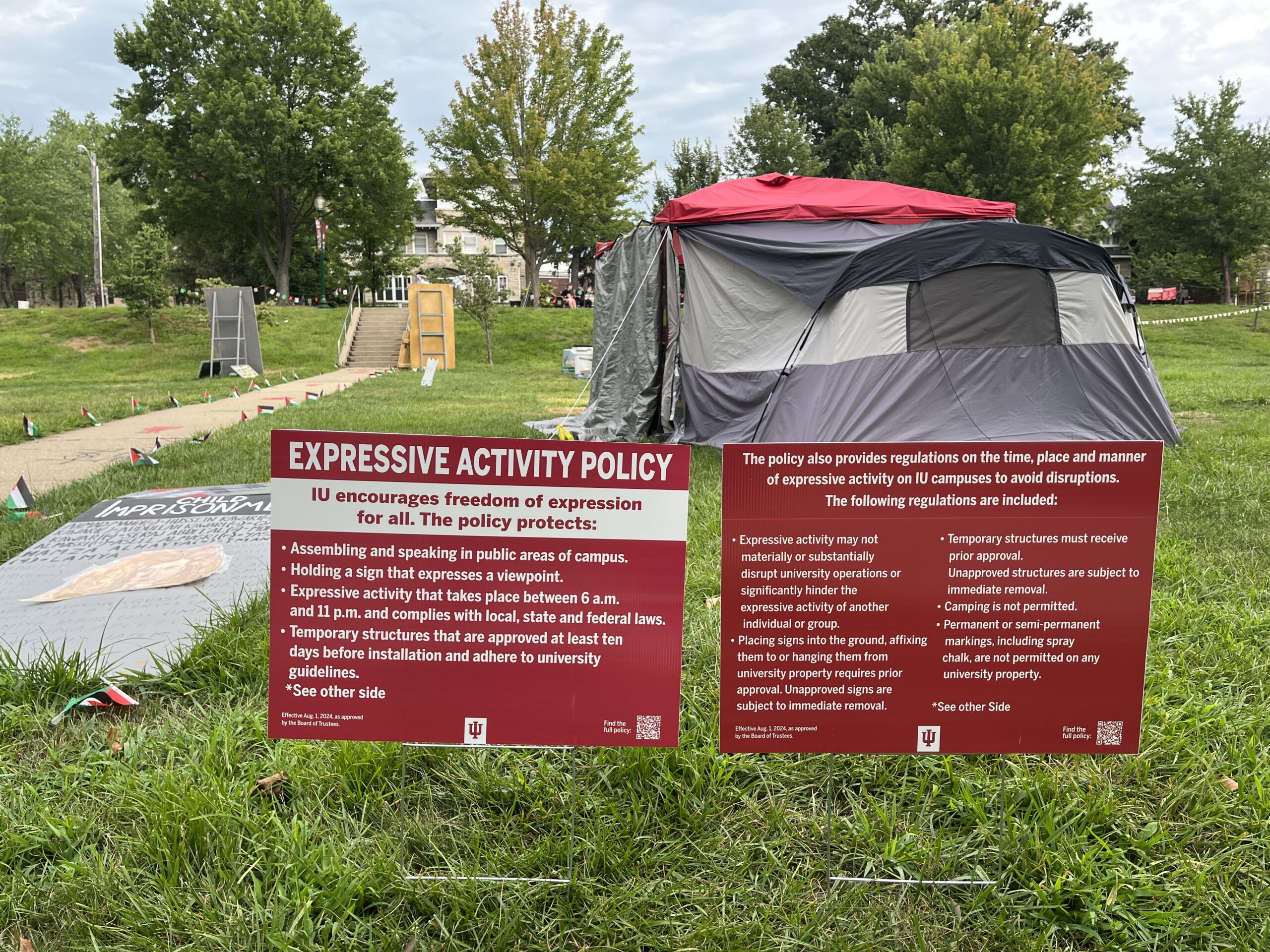
Indiana University’s new expressive activity policy goes into effect on Thursday.
Correction: The new policy bans camping, limits hours of expressive activity from 11 a.m. to 6 p.m.
The new policy bans camping, limits hours of expressive activity from 6 a.m. to 11 p.m. and requires that structures be approved by the university at least 10 days in advance, among a variety of other new procedures.
To learn more, WFHB News traveled to Dunn Meadow earlier today to hear from demonstrators about what the future holds for the encampment. One protester who uses the alias, Fox, gave their reaction to the events that unfolded in April which led to the state police arresting 57 people who were protesting Israel’s war on Gaza.
“Infuriated was the easiest descriptor. My friends and the hard work that we’d done the night before, it was stripped up in front of our eyes. It was absolutely disgusting,” said Fox.
Fox said the new policy silences dissenting voices and limits students’ freedom of expression.
“It will be significantly harder for students to have their voices heard. And not only students but the faculty that have also been expressing since April,” they said.
Moving forward, there’s a level of uncertainty on what happens next for the Dunn Meadow demonstrations. As of around 2:20 p.m., Fox said that protests and demands for divestment will continue.
“At the moment, a little bit undecided. We will still protest. We will still encourage divestment. However I do not think that there is an active plan to maintain the encampments. If we are told to disperse, however, that is subject to change.”
Other protesters say a more cohesive plan for the future will be announced in the coming days. Fox speculated on how the policy will play out in the upcoming school year.
“That’s really up in the air,” they said. “The student body and faculty are dissenting openly, no matter how or what form it takes.”
The university has maintained that the new policy focuses on free speech, stating in a news release, “The new policy supports protests and demonstrations that don’t materially and substantially disrupt university operations or hinder the expressive activity of another individual or group.”
However, Fox described how they think the new policy relates to free speech.
“It doesn’t. It’s designed to protect the private interests of the people who are making money off of IU; it does not protect free speech,” they said.
WFHB News spoke to another protestor who reiterated the main goal of the demonstrations: the liberation of Palestine.
“At the end of the day the goal is the Liberation of Palestine through the divestment of trained naval infrastructure from IU,” said the demonstrator. “Students’ rights is an important issue. Free speech is an important issue. But we are here for Palestine, Palestine alone.”
To view the new expressive activity policy and Indiana University’s statement regarding that policy, click the aforementioned links.
Feature Report:
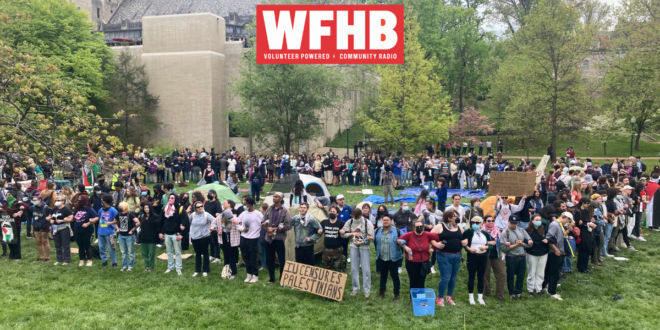
In light of the new policy change from IU, we revisit a report from WFHB News Correspondent Annika Harshbarger titled “Banned from IU: Part 2.” This is the second part of a three-part series chronicling the experience of IU student Cameron Gray who was arrested for protesting at Dunn Meadow in April and subsequently banned from campus. This week, we will revisit all three parts of that series of reports on the WFHB Local News. Annika Harshbarger has more.

Up next, “The Weed of Crime Bears Bitter Fruit” on Better Beware – your weekly consumer-watchdog segment on the WFHB Local News. We turn to host and producer Richard Fish for more.
Credits:
You’ve been listening to the WFHB Local News,
Today’s headlines were written by Norm Holy, Jessie Grubb, Kade Young and Noelle Herhusky-Schneider, in partnership with Cats – Community Access Television Services.
Our feature was produced by Annika Harshbarger.
Better Beware is produced by Richard Fish.
Our theme music is provided by Mark Bingham and the Social Climbers.
Engineer and Executive producer is Kade Young.