WFHB Bloomington Community Radio


Podcast: Play in new window | Download (Duration: 30:49 — 70.5MB)
Subscribe: RSS
In this edition of Eco Report, we hear from Andy Mahler, Forest and Water Protector from Orange County about a new lawsuit against the Forest Service for violating their own policy guidelines by circumventing public procedures under the pretense of salvage logging after some tornado damage.

Inside Climate Change reports one of the most common critiques of policies that encourage the adoption of rooftop solar is that the benefits go mostly to affluent households. But as solar grows in popularity across the country, it also is expanding its reach across income levels. The median income for a household that installed rooftop solar in 2023 was $115,000, down from $141,000 for households that installed solar in 2010, according to the 2024 edition of an annual report from Lawrence Berkeley National Laboratory.
The progress is clear, but gradual. The $115,000 figure from 2023 is just $1,000 less than in 2022. The long-term trend is that the median income for a household with rooftop solar is getting closer almost every year to that of the median income for owner-occupied households. “Solar has gotten cheaper, and so that has made it more accessible to a broader swath of the population,” said Galen Barbose, a research scientist at the lab and co-author of the report. Apparently no study of income by Hoosier buyers is available. Because of state regulations, Indiana is often ranked worst for installation of rooftop solar.
EcoWatch says birding is a much bigger industry than you knew. In 2022, around 96 million people in the U.S. closely observed, photographed or tried to identify birds in the wild—activities known broadly as birding. For context, that means more than 35 percent of the country’s population aged 16 and over are birders. It turns out this staggeringly popular hobby adds up, according to a November report from the U.S. Fish & Wildlife Service. The report found that birders in 2022 spent an estimated $107.6 billion on expenses related to their pursuits—from buying equipment like binoculars to travel costs for visiting bird hotspots.
That’s almost six times the total revenue generated by the National Football League that year. This report shows that birding is a boon for local economies, a trend that can be seen around the world as the avian pastime continues to pick up steam and offers a sustainable revenue source for rural communities. But birders aren’t just chipping in financially; these hobbyists provide crucial data for scientists as climate change pummels global bird populations.
We can expect barriers to solar and wind during Trump’s term. Most other countries slacked off on developing planet-friendly power sources during his earlier presidency, so we are likely to see the same over the next four years. China, however, is setting its own course. China is now building capacity in wind and solar that is four times what the US is planning.
Wind and solar now account for 37 percent of the total power capacity in China, an 8% increase from 2022, and widely expected to surpass coal capacity, which is 39 percent of the total right now, in 2024. The USA generates 11 percent of its power from wind and 5 percent from solar sources. Indiana generates 11 percent of its power from wind and 2 percent from solar sources.
According to the New York Times an ocean heat wave wiped out half of common murres around Alaska. About four million common murres were killed by a domino effect of ecosystem changes, and the population is showing no signs of recovery, according to new research. The first evidence was the feathered bodies washing up on Alaskan beaches. They were common murres, sleek black-and-white seabirds that typically spend months at a time away from land. But in 2015 and 2016, officials tallied 62,000 emaciated corpses from California to Alaska.
Since then, scientists have been piecing together what happened to the birds, along with other species in the northeast Pacific that suddenly died or disappeared. It became clear that the culprit was a record-breaking marine heat wave, a mass of warm water that would come to be known as the Blob. New findings on its effect on murres, published in the journal Science, are a stark sign of the perils facing ecosystems in a warming world.
According to the United States National Oceanic and Atmospheric Administration (NOAA)’s 2024 Arctic Report Card, tundra in the Arctic is becoming a net source of carbon dioxide, rather than the climate-beneficial carbon sink it has been for millennia. This year was the second warmest in the Arctic, based on data dating back to 1900, the report said.
“The Arctic continues to warm at a faster rate than the global average. The 2024 Arctic Report Card highlights record-breaking and near-record-breaking observations that demonstrate dramatic change, including Arctic tundra transformation from carbon sink to carbon source, declines of previously large inland caribou herds, and increasing winter precipitation,” NOAA said. “Adaptation is increasingly necessary and Indigenous knowledge and community-led research programs are essential to understand and respond to rapid Arctic changes.”
2024 was the warmest year over the 300,000 years of human existence. Global warming hit 1.63 C. With accelerating warming and likely vastly greater CO2 during the Trump years, we seem to be on a course to pass the 2.0 C warming within a few years.
The assault on the Arctic National Wildlife Refuge resumes even before Trump takes office. The Biden administration will offer oil and gas drilling leases in Alaska’s Arctic National Wildlife Refuge at a sale on Jan. 9. The auction will make 400,000 acres available to drillers, the minimum required by a law that mandated the sale. ANWR is a 19 million-acre refuge for species including polar bears and caribou. The wild landscape lacks roads and public facilities, but its 1.6 million-acre coastal area along the Beaufort Sea is estimated to have up to 11.8 billion barrels of recoverable oil.
The last time an auction like this was held, just days before Trump left office in 2021, the Arctic National Wildlife Refuge was sold off for only $25 an acre. The requirement of the sale is founded in a law passed during Trump’s first term. The 2017 Tax Act required the Bureau of Land Management to offer two lease sales in the Coastal Plain within seven years of enactment. During Trump’s first term, the first lease sale was held and resulted in nine leases being issued.
In January 2021, President Biden issued an order directing the Interior Department to review the Coastal Plain Oil and Gas Leasing Program. As a result of the deficiencies found during that review, in June 2021, Secretary of the Interior Deb Haaland issued a ruling which suspended all activities related to implementing the Leasing Program. Of the nine leases sold during the previous Administration’s sale, two were canceled and refunded at the request of the lessees and the remaining seven were canceled by the Department due to multiple legal deficiencies in the underlying record.
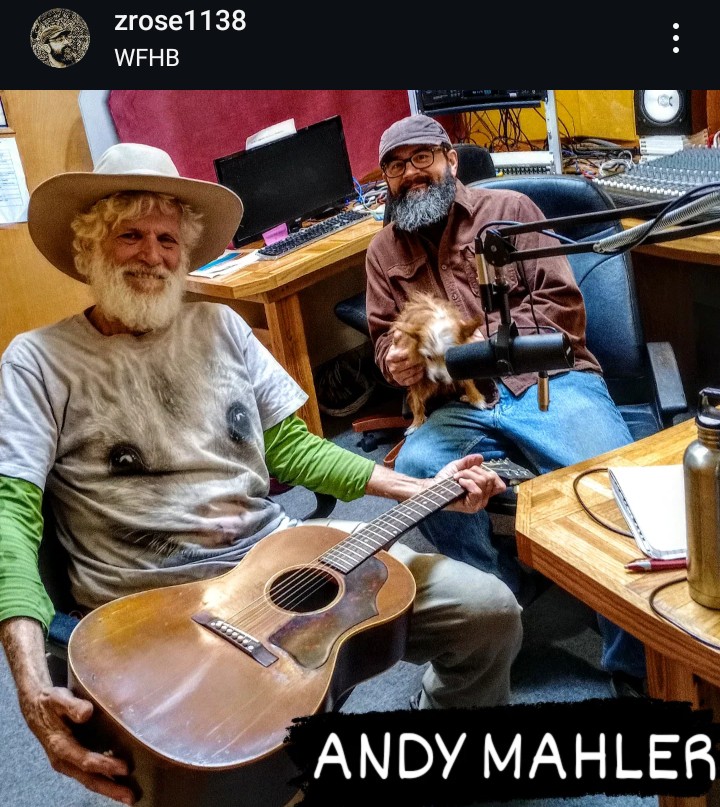
In this week’s feature report we hear part one of a conversation between Zero Roze and Andy Mahler of the Heartwood network of forest protection groups and the organization Protect Our Woods.

- Take the Kelp Village Hike during the Winter Hike Series at Brown County State Park on Saturday, January 4th, from 11 am to 12:30 pm. Explore the old Kelp Village site on this 1.5 mile hike while you learn the history of the area.
- Enjoy Hike and Seek with your pre-school children at the RCA Community Park on Tuesday, January 7th, from 10 to 11 am. Explore nature on this gentle-paced hike.
- Whooper Wednesday’s will continue at Goose Pond Fish and Wildlife Area every Wednesday until February 26th. Meet at the Visitor’s Center at 8 am Wednesday, January 8th, to walk around the property to see if you can spot the endangered Whooping Crane.
- Learn about Winter Weeds at McCormick’s Creek State Park on Friday, January 10th at 2 pm. You will find out how to identify the weeds on your lawn, what there benefit is, and whether you want to keep them or get rid of them.
- Visit the Caves of Spring Mill State Park on Saturday, January 11th, at 1 pm. Meet at the Lakeview Activity Center for this 1 hour hike to learn the significance the cave’s played in the 2015 dredging of the lake.
Credits:
On Air………………………………….Julianna Dailey
On Air…………………………………Cynthia Roberts
Headlines…………………………………..Norm Holy
Feature Report……………………………..Zero Roze
Script…………………………………..Julianna Dailey
Events Calendar………………………Julianna Dailey
Engineer……………………………..Branden Blewett
Are you looking for a way to make a difference on environmental issues?
Eco Report is looking for reporters, engineers, and segment producer to report facts on how we’re all affected by global climate disruption and the ongoing assaults on our air, land and water. We also celebrate ecologists, tree huggers, soil builders and other champions who actively protect and restore our natural world, particularly those who are active in south central Indiana. All levels of experience and all ages are welcome, and we provide the training you’ll need. WFHB also offers internships.
To volunteer for Eco Report, call at (812) 323-1200, or e-mail [email protected].