WFHB Bloomington Community Radio


Podcast: Play in new window | Download (Duration: 31:03 — 71.1MB)
Subscribe: RSS
In this edition of Eco Report, we hear Part Three of an Eco Report EXTRA, an extended interview with Andy Mahler of Heartwood and Protect Our Woods on their new lawsuit against the Forest Service.
The Hill reports President Trump’s pick for Environmental Protection Agency (EPA) is Lee Zeldin. Lee Michael Zeldin (born1980) is an American attorney, politician, and officer in the United States Army Reserve. A member of the Republican Party, he represented New York’s 1st congressional district in the United States House of Representatives from 2015 to 2023. In April 2021, Zeldin announced his candidacy for governor of New York in 2022. He defeated three challengers in the Republican primary, becoming the nominee of the Republican Party and the Conservative Party. Zeldin lost the election to incumbent governor Kathy Hochul.
In April 2018, Zeldin said he did not support the Paris Agreement in its form. He expressed concern about “other countries that are contributing to very adverse impacts on our climate but not having the level of responsibility that they need to have in stepping up and making a positive change in their own countries”. During Donald Trump’s first presidency, Zeldin was a Trump ally.
He prominently defended Trump during his first impeachment hearings concerning the Trump–Ukraine scandal. During his gubernatorial campaign in 2021, he pledged to reverse New York state ́s 2015 ban on hydraulic fracturing. In 2022, he voted against the Inflation Reduction Act. During his confirmation hearing for EPA Director, Zeldin stated that climate change is a real issue and needs to be addressed.
However, he actually appears poised to be able to carry out the significant level of climate and environmental deregulation Trump has indicated he plans to pursue after a Thursday hearing moved him toward his likely confirmation. During the confirmation hearing, Zeldin declined to say whether he believed the EPA had a responsibility to regulate climate change under the law.
According to the Live Science portal, Chinese scientists plan to construct a giant solar power station in space approximately 0.6 miles wide. The installation is tasked with transmitting uninterrupted energy to Earth in the form of microwave waves. Placing the individual elements in geostationary orbit has been dubbed the “another Three Gorges Dam project above the Earth.”
The existing Three Gorges Dam, located in central China on the Yangtze River, is considered the world’s largest hydropower project, delivering 100 billion kilowatt-hours of electricity annually. One NASA scientist noted that the mass of water in the fully filled dam could lengthen the duration of a day on Earth by 0.06 microseconds.
Long Lehao, the chief specialist for Long March rockets, was quoted by Live Science as acknowledging that the new initiative will have significance comparable to moving the Three Gorges Dam to an orbit at an altitude of 22,000 miles above Earth. During a lecture organized by the Chinese Academy of Sciences, Long emphasized that the energy collected over a year could equal the total amount of oil extracted from our planet.
The New York Times reports that during the first Trump administration, Virginia Burkett, a senior government scientist, felt like she had a target on her back. She fought attempts by Trump officials to eliminate climate research programs while also rejecting their requests that she alter the nation’s premiere report on how global warming affects every region of the country.
But Dr. Burkett says she paid a price. In a whistle-blower complaint, she said the Trump administration retaliated by demoting her and removing her as chair of the committee overseeing the report. Her experience was part of a broad assault on science across the federal government during the first Trump administration. Other scientists were also demoted or reassigned, projects were disrupted and scientists were pressured to delete their research or were blocked from publicizing it.
In the end, hundreds of scientists and experts in environmental policy left the government. One senior government official, who works in science and spoke on the condition of anonymity out of fear of retaliation by the Trump administration, said career employees had started building a firewall four years ago. “We’ve been preparing since Day 1” of the Biden administration to better protect science and scientists, the official said.
Steps taken include the creation and expansion of scientific integrity policies at many federal agencies that detail how government scientists should conduct and publish research, what to do if political appointees try to block that work, and outline the penalties for violations. Scientific integrity officers have been newly installed at several agencies to enforce the policies. And new union contracts carry consequences for political appointees who retaliate against scientists for following the policies.
Scientists have long posited that rising temperatures may be weakening the jet stream, which is formed by the collision of cold, Arctic air with warm, southerly air. With climate change, the Arctic is warming faster than the lower latitudes, narrowing the difference in temperature. As a result, the jet stream may be growing slower and wavier, allowing warm air from the tropics to flow north and become trapped over Europe, Asia, and North America, fueling severe heat and intense wildfires.
In the winter we are seeing bouts of frigid weather, as arctic air moves south. The effect comes with the wavier jet stream. With a more wavy jet stream there is more area for the transfer of heat from the equatorial region to the polar region. We also see warm areas moving north in the Pacific and driving the arctic air mass south into the Midwest. There are days when Bloomington is colder than Anchorage, Alaska.
Earth.org reports that Donald Trump deliberately withheld disaster aid to states he deemed politically hostile and will do so again now that he is our new President, former White House advisers have said.
Mark Harvey, Trump’s former senior director for resilience policy, said that Trump initially refused to approve disaster aid in 2018 after deadly wildfires devastated California, historically a democratic-leaning state. The then-president only agreed after Harvey showed him that some heavily damaged counties had numerous Republican supporters.
“We went as far as looking up how many votes he got in those impacted areas … to show him these are people who voted for you,” said Harvey. “There’s no empathy for the survivors. It is all about getting your photo-op, right? Disaster theater to make him look good.”
According to E&E News, Trump’s disaster aid approval was heavily politicized in two other occasions: Hurricane Maria, which killed more than 3,000 people across Puerto Rico and the US Virgin Islands in 2017 and Hurricane Michael, which caused massive damage in Florida – a red state – a year later. Trump has already been critical of the way California has handled the fire crisis. Gov. Gavin Newsom has invited Trump to come to California to see the damage for himself.
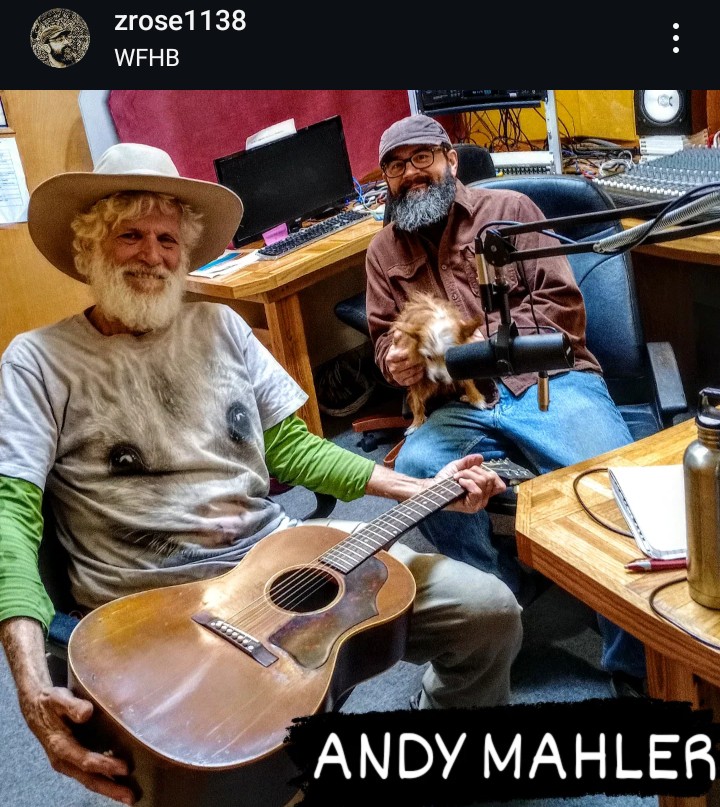
In this week’s feature report, Zero Roze delivers Part Three of his discussion with forest protector and long time environmental activist Andy Mahler. The full interview is available on our website as an Eco Report EXTRA, which can be found online at WFHB.org.

- Enjoy a Squirrel Appreciation Day Hike at the RCA Community Park on Saturday, January 25th, from 2:30 to 3:30 pm. Learn all about squirrels and explore the important role they play in maintaining a balanced ecosystem. Sign up at bloomington.IN.gov/parks.
- The Winter Hike Series at Brown County State Park continues with The Lake That Never Was Hike on Saturday, January 25th, from 11 am to 1:30 pm. Learn about Taylor Hollow Lake that was started but never finished. This hike is a fan favorite that is 2.5 miles long, very rugged and you will cross creeks. Dress for the weather and terrain.
- Whooper Wednesday’s will continue at Goose Pond Fish and Wildlife Area every Wednesday until February 26th. Meet at the Visitor’s Center at 8 am Wednesday, January 29th, to walk around the property to see if you can spot the endangered Whooping Crane.
- Attend a Bird Beak Lab at McCormick’s Creek State Park on Friday, January 31st, from 2 to 2:45 pm. Since birds do not have hands or teeth, find out how they use their beaks to eat, build their nests, and how they adapt to their environment. Meet in the Nature Center.
- Play Bird Bingo at McCormick’s Creek State Park on Saturday, February 1st, from 10 to 10:30 am. Help the Naturalist fill the bird feeders at the Nature Center, then play bingo to learn easy bird identification.
Credits:
On Air………………………………….Julianna Dailey
On Air…………………………………Cynthia Roberts
Headlines…………………………………..Norm Holy
Feature Report……………………………..Zero Roze
Script…………………………………..Julianna Dailey
Events Calendar………………………Julianna Dailey
Engineer……………………………..Branden Blewett
Are you looking for a way to make a difference on environmental issues?
Eco Report is looking for reporters, engineers, and segment producer to report facts on how we’re all affected by global climate disruption and the ongoing assaults on our air, land and water. We also celebrate ecologists, tree huggers, soil builders and other champions who actively protect and restore our natural world, particularly those who are active in south central Indiana. All levels of experience and all ages are welcome, and we provide the training you’ll need. WFHB also offers internships.
To volunteer for Eco Report, call at (812) 323-1200, or e-mail [email protected].